 News
Table of Contents
If you bought a Jeep Wagoneer S or a Dodge Charger Daytona this spring, your road-trip map just got a lot bigger. Stellantis has confirmed it is adopting the NACS connector for select battery-electric vehicles across North America, Japan, and South Korea, which opens the door to more than 28,000 Tesla Superchargers. That is one of the last big domestic automakers to formally join the NACS camp, and it tells you something important about where public charging is heading as of June 2026. We pulled together the three stories that matter most this month and translated each one into a decision you can actually act on, whether you are shopping for a home charger, planning a long trip, or pulling a permit for a new garage circuit.
The Stellantis NACS Move and What It Means for Drivers
The headline is straightforward. Stellantis is bringing NACS to select BEVs in North America, Japan, and South Korea, and the rollout is already underway. Access started in early 2026 for existing North American models like the Jeep Wagoneer S and the Dodge Charger Daytona, with the 2026 Jeep Recon and other future products following behind. For owners of those vehicles, the practical upshot is access to the Tesla Supercharger network, which has long been the most reliable and densely built fast-charging network in the country. Either way, the number of plugs you can pull into on a Saturday afternoon jumps dramatically.
For the rest of us, this matters even if we do not drive a Stellantis vehicle. Every automaker that joins NACS pushes the whole industry further toward a single, predictable plug standard, which reduces the odds you show up to a station and find the wrong connector or a broken cable. It also reshapes how we think about home versus public charging. The more dependable public fast charging becomes, the less pressure there is to oversize a home setup for rare road-trip scenarios. Most daily driving is still best handled by a Level 2 charger at home overnight, and the public network is the backup for long hauls. If you want to understand how that nightly charging habit affects your costs, our guide to charging at night for off-peak savings breaks down the math.
NEVI Reboot and the CCS Coexistence Reality
The other big public-charging story is the federal NEVI program, which funds fast-charging corridors along major highways. After a stretch of uncertainty, the program received new streamlined guidance in August 2025 that effectively rebooted it, and by early 2026 many states had resumed or restarted their NEVI corridor projects. That is good news for anyone who drives between cities, because it means the gaps in highway charging coverage are getting filled in again rather than sitting frozen. We expect the pace of new corridor stations to pick up through the rest of 2026 as states work through their restarted pipelines.
Here is the nuance that trips people up. NACS momentum does not mean CCS is going away tomorrow. To receive federal funding, a station must still offer CCS1, and CCS remains mandatory under federal law until the guidelines are formally updated. Many states now allow an added NACS plug alongside the required CCS connector, which is why most new DC fast chargers from Electrify America, ChargePoint, and EVgo now ship with dual cables carrying both standards. As of June 2026, the safe assumption when you plan a trip is that you will find both plug types at newer stations, but you should still carry whatever adapter your vehicle needs. We would not retire a CCS adapter just yet, because the dual-cable transition is happening station by station, not overnight.
NEC 2026 and the New Rules for Home Installs
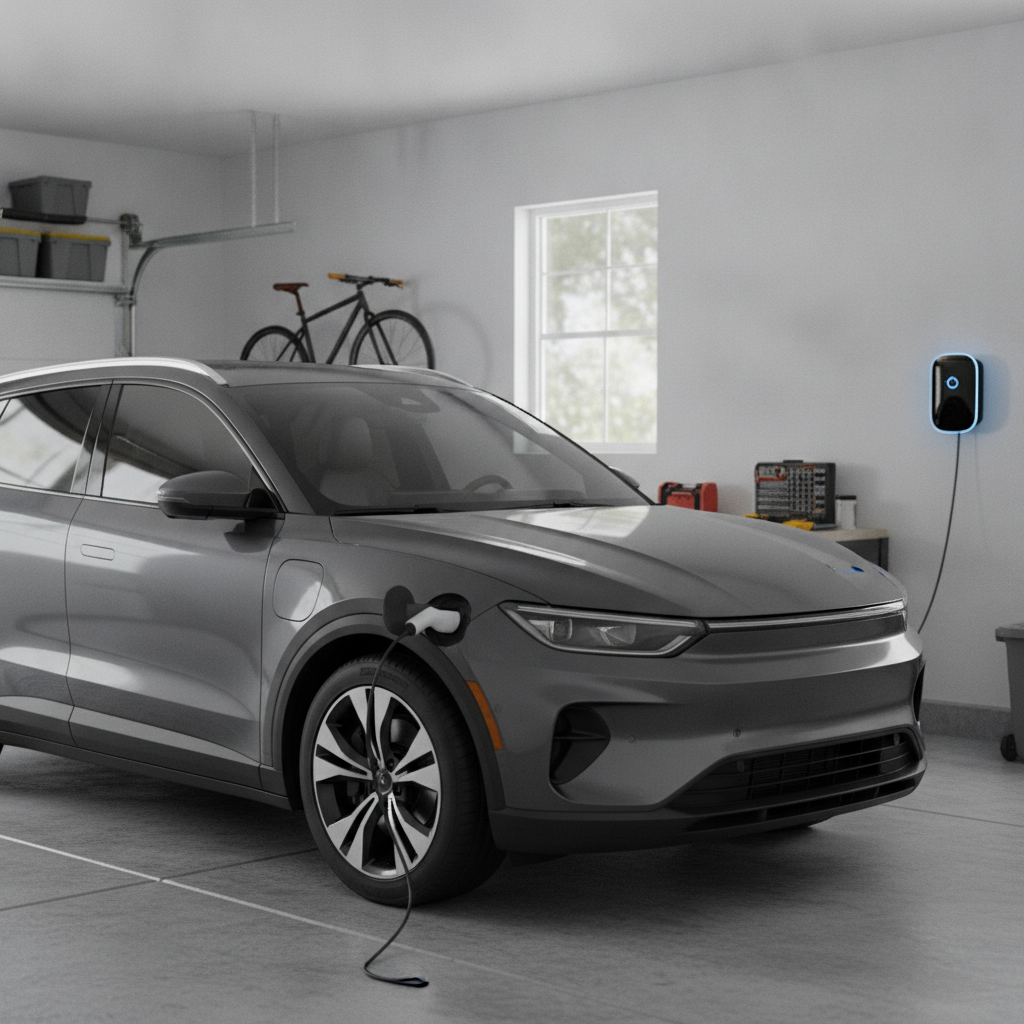
The change that hits homeowners most directly is in the 2026 National Electrical Code. The new code requires every new one- and two-family dwelling to include a 240V NEMA 14-50 outlet on a dedicated 50A circuit in the garage or parking area. In plain terms, if you are building a house or it is being built for you in a jurisdiction that has adopted the 2026 NEC, an EV-ready outlet is no longer an upgrade you have to ask for. It is baked into the build. That is a meaningful win, because retrofitting a 50A circuit into a finished garage is far more expensive and disruptive than running it while the walls are open. If you have any say in a new build this year, confirm the electrician is placing that circuit where you will actually park.
The second NEC 2026 change is just as important and easier to overlook. The code adds a “qualified person” requirement for permanently installed EV charging equipment, and most states interpret that as a licensed electrician. If you were planning to hardwire a Level 2 charger yourself, that path is narrowing in many jurisdictions, and a permit and inspection are increasingly part of the deal. We think this is the right call for safety, since a hardwired 240V circuit feeding a continuous 40A or 48A load is not a casual DIY job. A plug-in charger on that new 14-50 outlet remains the more flexible option for most homeowners, because you can take it with you when you move and you avoid some of the hardwire labor. For a sense of what that charging adds to your monthly bill, see our breakdown of how much an EV charger adds to your electric bill.
Our Recommendations for Mid-2026
Putting it together, here is how we would approach charging decisions right now. If you are buying a new vehicle, treat NACS as the default and confirm what adapter, if any, ships in the box. The Stellantis move shows the standard is consolidating, and you want hardware that plays nicely with Superchargers and dual-cable stations alike. For trips, plan around the assumption that newer NEVI-funded and private fast chargers carry both CCS and NACS, but keep your adapter in the trunk through the rest of 2026 while the rollout finishes.
On the home side, lean into the NEC 2026 framing even if your area has not formally adopted the code yet. Ask for a dedicated 50A circuit and a NEMA 14-50 outlet near where you park, use a plug-in Level 2 charger for flexibility, and budget for a licensed electrician and a permit. If you are thinking further ahead, the same robust circuit is the foundation for two-way charging setups, which we cover in our guide to bidirectional charging and vehicle-to-home in 2026. A little planning now saves you a wall-opening retrofit later.
Sponsored
Need Help With Your EV Charger?
Get expert guidance on installation, costs, and the right charger for your home.
Get Your Free EstimateNeed Help With Your EV Charger?
Get expert advice on the right charger, installation requirements, costs, and how to maximize your savings.