 Charger Types
Table of Contents
When you bring home an electric vehicle for the first time, you’ll quickly run into two terms: Level 1 and Level 2 charging. The difference sounds technical, but it really comes down to one thing - how fast do you need your car charged by morning?
This guide breaks down both charger levels in plain English, covers the real costs of each, and helps you figure out which one actually makes sense for your situation.
What Is Level 1 Charging?
Level 1 charging uses a standard 120-volt household outlet - the same kind you plug a lamp or phone charger into. Every EV comes with a Level 1 charging cable (called an EVSE, or Electric Vehicle Supply Equipment) right in the box.
The key facts about Level 1:
- Uses a standard 3-prong 120V outlet (NEMA 5-15)
- Adds roughly 3 to 5 miles of range per hour of charging
- No special equipment or electrical work required
- Works anywhere you have a regular outlet
To put that in perspective: if your EV has a 250-mile range and you come home with an empty battery, it would take about 60 to 80 hours to fully charge on Level 1. That’s more than three days.
When Level 1 Is Enough
Despite the slow speed, Level 1 works perfectly well for some drivers. If you drive fewer than 30 to 40 miles per day, a regular overnight charge on Level 1 can top your battery off without any problem. You plug in at 6 PM, and by 6 AM you’ve added 36 to 48 miles - more than enough for another day of errands, commuting, or short trips.
Level 1 also makes sense if you:
- Are in an apartment or rental and can’t install new equipment
- Want zero upfront installation cost
- Drive a plug-in hybrid (PHEV) with a smaller battery
- Only need EV charging occasionally
What Is Level 2 Charging?
Level 2 charging uses a 240-volt circuit - the same type of power that runs your dryer or electric oven. It requires either a hardwired wall charger or a NEMA 14-50 outlet (a special 4-prong 240V outlet), plus a dedicated 40- or 50-amp circuit installed by an electrician.
The key facts about Level 2:
- Uses a 240V circuit (like your dryer or oven)
- Adds roughly 15 to 30 miles of range per hour
- Requires a dedicated circuit and professional installation
- Most homeowners pay $700 to $1,600 all-in, including hardware
With Level 2, that same 250-mile battery charges from empty in roughly 8 to 12 hours. More realistically, most drivers come home with 100 to 150 miles of range used, which means a full charge by morning with hours to spare.
Popular Level 2 Charger Brands
Several well-regarded brands dominate the home Level 2 market:
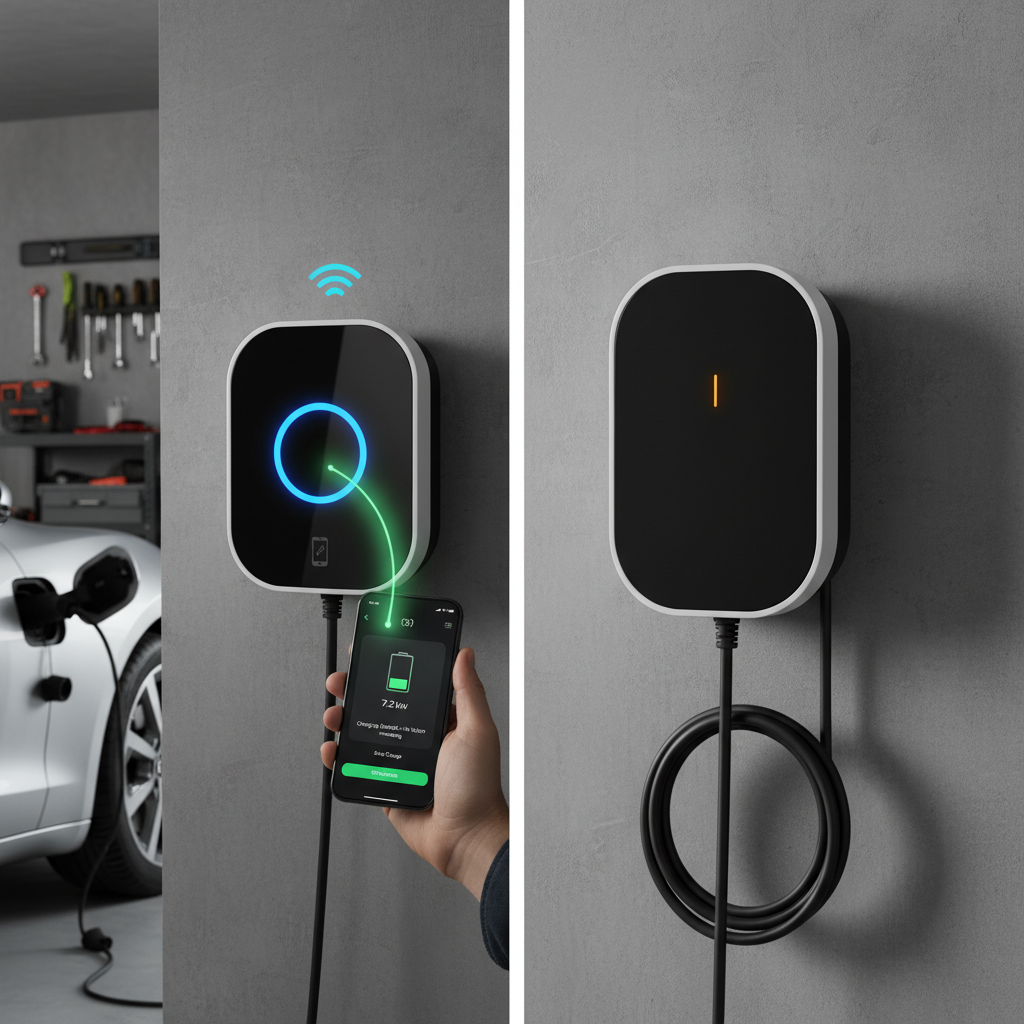
- ChargePoint Home Flex – One of the most popular, supports 16 to 50 amps, Wi-Fi enabled, around $700
- Grizzl-E Classic – No-frills, built like a tank, great for garages, around $300
- Emporia Level 2 – Budget-friendly with smart features, around $250
- Tesla Wall Connector – Best for Tesla owners, integrates with the Tesla app, around $400
- Enel X JuiceBox 48 – App-connected, good scheduling features, around $600
Level 1 vs Level 2: Side-by-Side Comparison
| Feature | Level 1 | Level 2 |
|---|---|---|
| Voltage | 120V | 240V |
| Miles added per hour | 3–5 miles | 15–30 miles |
| Equipment cost | $0 (included with car) | $250–$800 |
| Installation cost | $0 | $300–$1,200 |
| Electrical work required | No | Yes |
| Full charge time (250-mile battery) | 60–80 hours | 8–12 hours |
| Best for | Low-mileage drivers | Most EV owners |
The Real Question: How Many Miles Do You Drive Daily?
The single best predictor of which level you need is your daily mileage. Here’s a simple rule of thumb:
Under 30 miles/day → Level 1 is probably fine 30 to 60 miles/day → Level 1 works, but Level 2 is more comfortable Over 60 miles/day → Level 2 is essentially required
The problem with staying on Level 1 when you drive more is “range anxiety creep” - you start watching the charge percentage too carefully, feeling stressed about whether you’ll have enough tomorrow, and avoiding activities that would drain the battery. Level 2 eliminates that entirely.
Cost of Installing Level 2 at Home
This is where most people hesitate. Installing a Level 2 charger requires a licensed electrician and usually costs between $300 and $1,200 for labor, depending on:
- How far your panel is from the garage
- Whether your electrical panel has room for a new 40- or 50-amp circuit
- Whether you need conduit run outdoors
- Local permit requirements
If your panel is full or outdated, you might also need a panel upgrade, which adds $1,500 to $3,000 to the project.
However, two things often offset that cost:
- Federal tax credit – The 30C tax credit covers 30% of the cost of equipment and installation, up to $1,000, through 2032
- Utility rebates – Many electric utilities offer $100 to $500 back just for installing a Level 2 charger at home
What About Level 3 (DC Fast Charging)?
You may have heard of Level 3 or DC fast charging - this is what you find at Tesla Superchargers and public charging networks. It can charge a battery to 80% in 20 to 45 minutes.
Level 3 is not a home option. The equipment costs $10,000 to $50,000 and requires three-phase commercial power. It’s for public charging stations only.
Which Should You Choose?
Here’s the bottom line:
Choose Level 1 if:
- You drive under 30 miles a day consistently
- You’re renting and can’t do electrical work
- You drive a PHEV with a small battery
- You want to try EV ownership with zero upfront commitment
Choose Level 2 if:
- You drive more than 30 miles a day
- You want the convenience of waking up to a full charge every morning
- You plan to own the EV for more than a year
- You have a garage or driveway and can do a permanent install
For most EV owners - especially those driving a full battery-electric vehicle - Level 2 is the right answer. The convenience alone is worth the one-time installation cost.
Frequently Asked Questions
Can I charge my EV on a regular outlet? Yes. Every EV comes with a Level 1 cable that plugs into a standard 120V outlet. It’s slow (3–5 miles per hour), but it works and requires no installation.
How much does Level 2 charger installation cost? Most homeowners pay $700 to $1,600 total, including the charger and electrician labor. If you need a panel upgrade, add $1,500 to $3,000 on top of that.
Does Level 2 charging damage the battery? No. Level 2 is considered the safest and most battery-friendly way to charge regularly. Most manufacturers actually recommend it over both Level 1 (which can be very slow on large batteries) and frequent DC fast charging.
Do I need a permit to install a Level 2 charger? In most jurisdictions, yes. Your electrician should pull the permit as part of the job. Some areas have streamlined EV charger permits that are fast and inexpensive.
Can I install a Level 2 charger myself? The charger itself can sometimes be DIY, but the 240V circuit must be installed by a licensed electrician in most states. Don’t skip this - improperly wired 240V circuits are a fire hazard.
What’s the difference between a hardwired charger and a plug-in charger? A hardwired charger is permanently wired into your wall. A plug-in charger uses a NEMA 14-50 outlet. Plug-in is slightly easier to move or replace; hardwired is more secure. Both work equally well for charging.
Sponsored
Need Help With Your EV Charger?
Get expert guidance on installation, costs, and the right charger for your home.
Get Your Free EstimateNeed Help With Your EV Charger?
Get expert advice on the right charger, installation requirements, costs, and how to maximize your savings.