Table of Contents
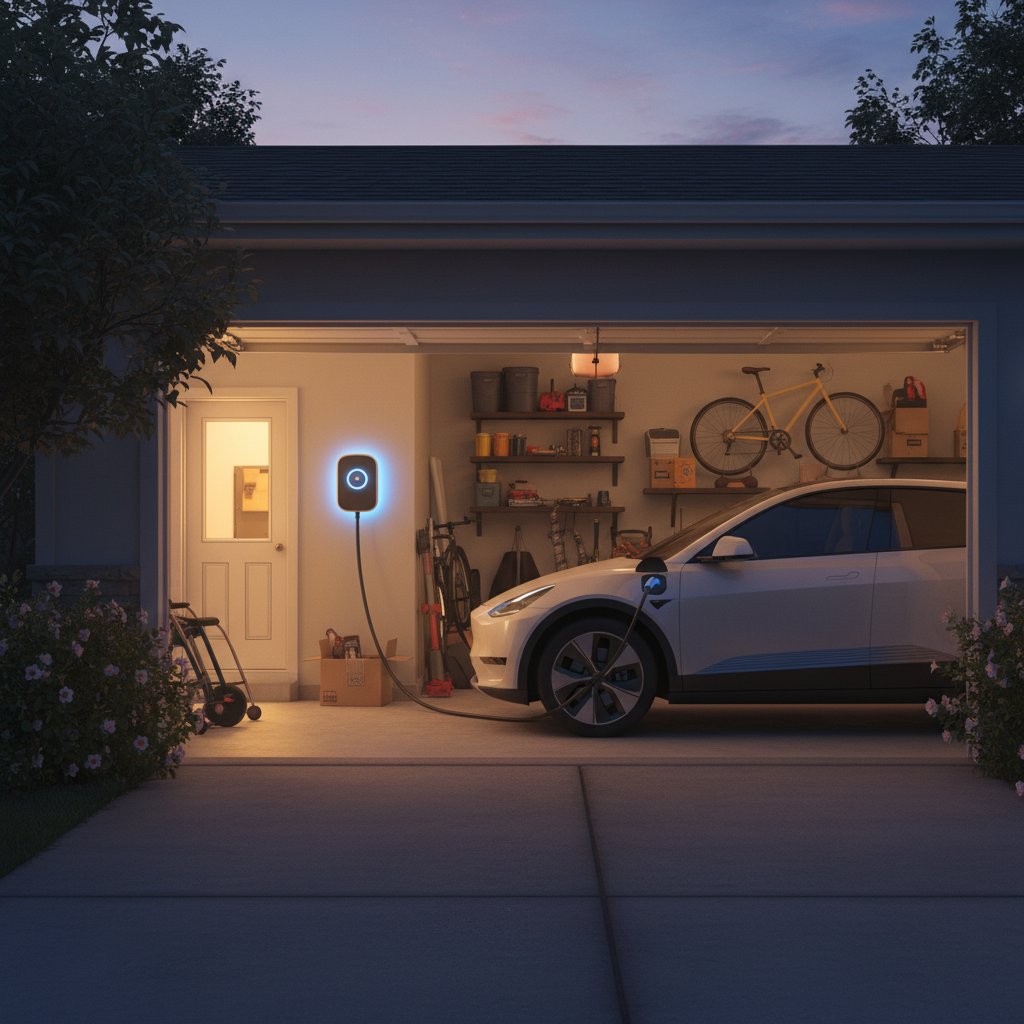
One of the biggest advantages of owning an electric vehicle is that you can “fuel up” at home while you sleep. But the real savings come when you charge at the right time. Most utility companies offer time-of-use (TOU) rates that make electricity significantly cheaper during off-peak hours - typically overnight. If you’re not taking advantage of this, you’re leaving money on the table every single night.
This guide covers how off-peak charging works, how much you can save, and how to set it up so it happens automatically.
What Are Off-Peak Electricity Rates?
Most utility companies charge different prices for electricity depending on when you use it. This is called time-of-use (TOU) pricing. The basic structure looks like this:
- Peak hours: Highest rates. Usually 2:00 PM to 7:00 PM on weekdays when air conditioning, cooking, and general household demand are at their highest.
- Mid-peak hours: Moderate rates. Typically morning hours (7:00 AM to 2:00 PM) and early evening.
- Off-peak hours: Lowest rates. Usually 9:00 PM to 7:00 AM and often all day on weekends and holidays.
The exact hours and prices vary by utility, but the pattern is consistent nationwide. Electricity is cheapest when demand is lowest, and demand is lowest in the middle of the night.
How Much Can You Actually Save?
The savings from off-peak charging are substantial. Here’s a real-world comparison using typical TOU rates:
| Rate Period | Cost per kWh | Cost to Add 200 Miles of Range |
|---|---|---|
| Peak (afternoon) | $0.35–$0.50 | $21–$30 |
| Off-Peak (overnight) | $0.08–$0.15 | $4.80–$9.00 |
That’s a difference of $15–$20 every time you charge from low to full. Over a year of regular commuting, off-peak charging saves most EV owners $500 to $1,200 annually compared to charging during peak hours.
To put that in perspective: at off-peak rates, the electricity cost per mile for most EVs is $0.02–$0.04. That’s the equivalent of paying $0.60–$1.20 per gallon for gas. No gas station in America can compete with that.
How to Set Up Scheduled Charging
Every modern EV has a built-in charging scheduler. The process is simple:
In Your Car’s Settings
- Open your vehicle’s charging settings (Tesla app, MyChevrolet, FordPass, etc.)
- Set a departure time (e.g., 7:00 AM) or a charging window (e.g., 11:00 PM to 6:00 AM)
- The car will wait to start charging until the scheduled time, even if it’s plugged in earlier
This means you can plug in the moment you get home from work and the car will wait until off-peak rates kick in before drawing power.
In Your Charger’s App
Many Level 2 home chargers also have scheduling features:
- ChargePoint Home Flex: Schedule via the ChargePoint app
- Tesla Wall Connector: Schedule via the Tesla app (linked to the vehicle)
- Emporia Smart Charger: Schedule via the Emporia app
- Grizzl-E Smart: Schedule via the Grizzl-E Connect app
If both your car and your charger have scheduling, use the car’s scheduler. It’s more reliable because the car controls when it draws power regardless of what the charger does.
Should You Get a Separate EV Meter?
Some utility companies offer a dedicated EV rate plan that requires a separate electric meter for your charger. This setup gives you a lower rate specifically for EV charging without affecting your home’s regular electric plan.
Pros of a separate EV meter:
- Lowest possible per-kWh rate (often $0.05–$0.10)
- Your home stays on a standard flat-rate plan
- Easy to track exact EV charging costs
Cons of a separate EV meter:
- Installation cost for a second meter and panel ($500–$1,500)
- Monthly service fee for the second meter ($5–$15)
- Only makes sense if you drive a lot (15,000+ miles/year)
For most homeowners, switching your entire home to a TOU plan and charging overnight is simpler and nearly as effective. The separate meter makes financial sense mainly for households with two EVs or high-mileage commuters.
Utility Programs Worth Knowing About
Many utilities offer specific EV programs beyond basic TOU rates:
- PECO (Pennsylvania): Offers a TOU rate plan. Off-peak rates apply 7 PM to 7 AM on weekdays and all day on weekends.
- PSE&G (New Jersey): Residential EV rate with discounted overnight pricing.
- Con Edison (New York): EV-specific TOU plan with overnight rates as low as $0.06/kWh.
- SCE (Southern California): TOU-D-PRIME plan specifically designed for EV owners.
- Georgia Power: Plug-In EV rate with super off-peak overnight pricing.
Contact your utility company and ask specifically about EV charging rates. Many of these programs require enrollment and won’t apply automatically.
Smart Charging Tips to Maximize Savings
Beyond basic scheduling, these strategies squeeze every cent out of off-peak charging:
-
Charge to 80% daily, 100% only when needed. Charging the last 20% is slower and less efficient. Keep your daily charge at 80% and only go to 100% before long trips.
-
Precondition your car while plugged in. Most EVs let you heat or cool the cabin while still connected to the charger. This uses grid power instead of battery power, giving you more range for your drive.
-
Track your usage. Smart chargers and utility apps show exactly how much energy you’re using and what it costs. Review monthly to make sure you’re staying in off-peak windows.
-
Consider solar + battery storage. If you have solar panels, a home battery (like Tesla Powerwall) can store solar energy during the day and charge your EV at night - effectively making your charging cost $0.00.
-
Don’t charge every day if you don’t need to. If you drive 30 miles a day and your EV has 250 miles of range, charging twice a week is plenty. This reduces wear on the battery and simplifies your schedule.
What If Your Utility Doesn’t Offer TOU Rates?
If your utility only offers flat-rate pricing, you won’t see a direct cost difference between day and night charging. However:
- You should still charge overnight to reduce strain on the local grid during peak hours
- Call your utility and ask if TOU plans are coming - many are rolling them out as EV adoption grows
- Look into community solar or third-party electricity suppliers that may offer TOU options
Even without TOU rates, home charging is dramatically cheaper than gas. The difference between peak and off-peak is really about optimizing an already great deal.
Frequently Asked Questions
What time is cheapest to charge my EV?
For most utility companies, the cheapest electricity rates run from approximately 9:00 PM to 7:00 AM on weekdays and all day on weekends. Check your specific utility’s TOU schedule for exact hours.
How much does it cost to charge an EV at night?
At typical off-peak rates of $0.08–$0.15 per kWh, a full charge from near-empty costs $5–$12 depending on your battery size. For daily commuting (30–50 miles), overnight charging costs $1–$3 per night.
Can I schedule my EV to only charge at night?
Yes. Every modern EV has a built-in charge scheduler. Set your preferred charging window in your car’s app or infotainment system, and it will wait until that time to start drawing power even if plugged in earlier.
Is it bad to leave my EV plugged in all night?
No. EVs are designed to be left plugged in. The car stops drawing power when it reaches your set charge limit. Leaving it plugged in does not overcharge the battery or waste electricity.
Should I switch to a time-of-use electricity plan for EV charging?
If your utility offers one, almost certainly yes. The savings on overnight EV charging typically outweigh any increase in peak-hour home electricity costs, especially if you run dishwashers, laundry, and other heavy appliances during off-peak hours too.
Do all utility companies offer off-peak EV rates?
Not all, but the number is growing rapidly. Contact your utility directly and ask about EV-specific rate plans or general time-of-use pricing. Many require enrollment and won’t apply automatically.
Sponsored
Need Help With Your EV Charger?
Get expert guidance on installation, costs, and the right charger for your home.
Get Your Free EstimateNeed Help With Your EV Charger?
Get expert advice on the right charger, installation requirements, costs, and how to maximize your savings.