 Installation
Table of Contents
You’ve decided to install a Level 2 EV charger at home - great choice. But before the electrician even touches a wire, there’s a question that could add thousands to your budget: does your electrical panel need an upgrade first?
The honest answer is: it depends. Many homes are perfectly capable of supporting a 240V, 50-amp EV charging circuit without any panel work. Others need at minimum a new breaker slot. And some older homes need a complete panel replacement before anything else happens.
This guide walks you through exactly what electricians look for, what the upgrade process involves, and how to know before spending money on a site visit.
What Is an Electrical Panel and Why Does It Matter?
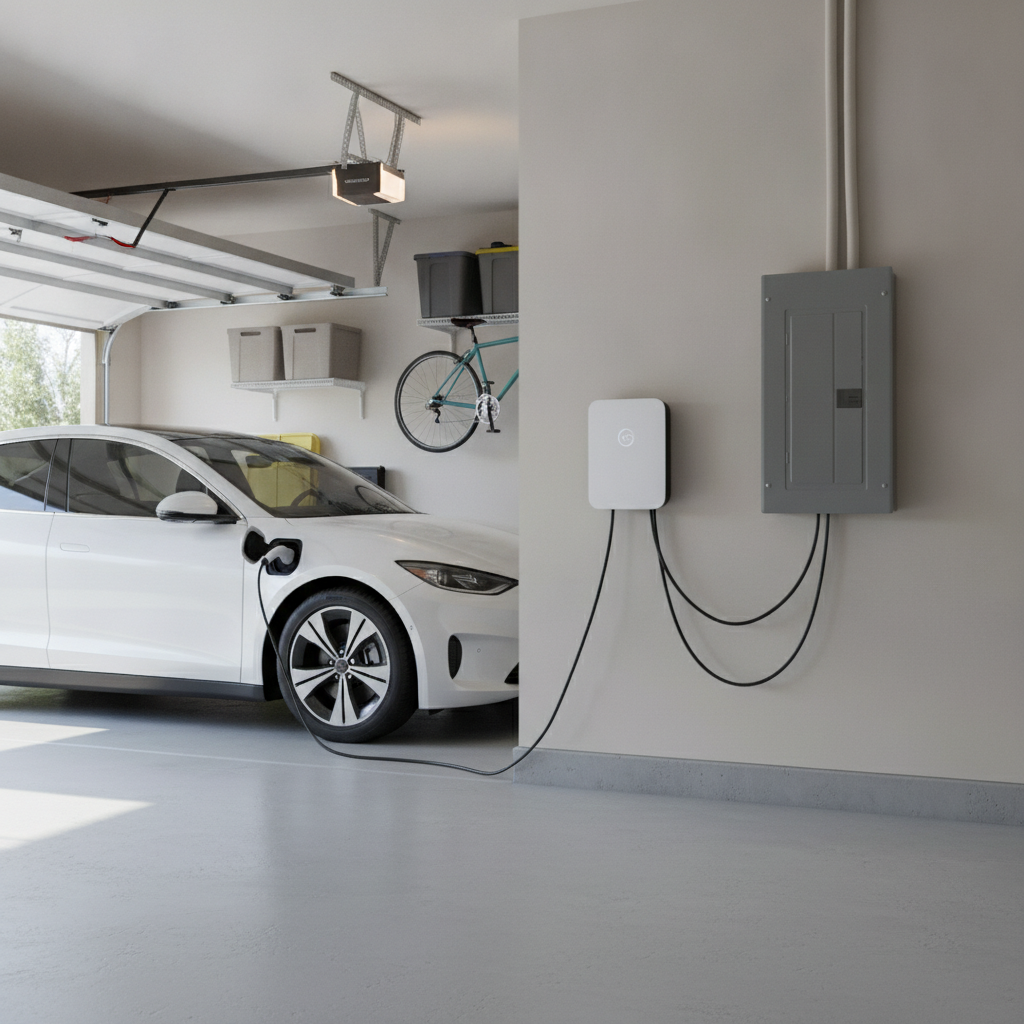
Your electrical panel (also called a breaker box or load center) is the hub that distributes electricity from the utility grid to every circuit in your home. Each circuit is protected by a breaker - a switch that trips if the circuit gets overloaded.
A Level 2 EV charger typically needs a dedicated 240V circuit with a 40-amp or 50-amp breaker. That means:
- A double-pole breaker slot must be available (or freed up)
- The panel must have enough total amperage capacity to handle the added load
- The wiring from the panel to the charger location must be properly sized
If any of those three things aren’t in place, you may be looking at electrical work before charging work.
How to Check If Your Panel Is Ready
Step 1: Find Your Panel’s Total Amperage
Look at the main breaker - the large switch at the top of your panel. It should be labeled with an amperage rating: commonly 100A, 150A, or 200A.
- 100-amp panels: Found in older homes, small homes, or anything built before the 1980s. Often need an upgrade.
- 150-amp panels: Less common, but usually manageable depending on existing load.
- 200-amp panels: The current standard. Usually sufficient for adding an EV charger.
If your home still has a 60-amp panel (found in some homes from the 1950s–1960s), an upgrade is almost certainly required.
Step 2: Count Available Breaker Slots
Open your panel door and look at the rows of breakers. A Level 2 charger needs a double-pole breaker, which takes up two slots.
- Do you see two open/blank slots side by side? You may be good to go.
- Is every slot filled? You’ll need to either add a tandem breaker (if your panel supports it) or upgrade.
Some panels, like older Federal Pacific or Zinsco models, should be replaced regardless - they have documented safety issues unrelated to EV chargers.
Step 3: Calculate Your Current Load
A 200-amp panel sounds like plenty - and usually it is. But if you have:
- Electric heat or an electric furnace
- An electric dryer, electric range, or electric water heater
- Central air conditioning
- A hot tub or pool pump
…you may already be running 150+ amps of potential load. Adding a 40–50 amp EV circuit could push you close to the limit.
An electrician will do a proper load calculation (following NEC Article 220) to determine your actual demand versus capacity.
Signs You Probably Need a Panel Upgrade
- Your main breaker is 100 amps or less
- You have a Federal Pacific Stab-Lok panel, Zinsco, or pushmatic panel
- Your breaker box is full with no open double slots
- You’ve had nuisance tripping on other circuits
- Your home still uses aluminum branch circuit wiring from the 1960s–70s
- An electrician has previously told you the panel is “maxed out”
Signs You’re Probably Fine Without an Upgrade
- 200-amp service is already installed
- You have a modern panel (Square D, Leviton, Siemens, Eaton, etc.)
- At least two open breaker slots are available
- Your current load is mostly lighting, standard appliances, and HVAC - no all-electric cooking or heating
What a Panel Upgrade Actually Involves
If an upgrade is needed, here’s what the process looks like:
New Panel Installation
The electrician will:
- Schedule a utility disconnect with your power company
- Remove the old panel and install a new load center (200A or sometimes 400A for large homes)
- Re-connect all existing circuits to the new panel
- Pull permits and schedule an inspection with your local authority having jurisdiction (AHJ)
This is a full-day job in most cases. Inspections may require a follow-up visit.
Service Entrance Upgrade
If your utility drop (the wires coming from the street or pole) are only rated for 100 amps, you may also need a service entrance upgrade. This involves your utility company and can take 2–6 weeks to coordinate in some areas.
Load Management as an Alternative
If your panel is close but not quite there, a load management device like the Span Smart Panel or a smart breaker system (like Eaton’s EVEMS) can monitor real-time usage and throttle your EV charger when demand is high. This can avoid a panel upgrade in some situations.
ChargePoint and some other charger manufacturers also offer “power management” features that limit charging speed based on household draw.
Real Cost Breakdown
Here’s a realistic breakdown of what to budget:
| Scenario | Typical Cost Range |
|---|---|
| EV charger install only (panel ready) | $300 – $800 |
| New 40–50A breaker + circuit run | $200 – $600 |
| Panel upgrade (100A to 200A) | $1,500 – $3,500 |
| Service entrance upgrade | $1,000 – $3,000 (plus utility fees) |
| Full service upgrade + panel + charger | $3,500 – $8,000+ |
Prices vary widely by region. Labor is typically higher in California, New York, and the Pacific Northwest.
What Permits Are Required?
Almost every jurisdiction requires a permit for EV charger installation - and definitely for any panel work. Don’t let a contractor skip this step. Unpermitted electrical work:
- Creates liability if there’s a fire or accident
- Can void your homeowner’s insurance
- Will come up during a home sale inspection
Your electrician should handle permit pulling as part of the job. Always verify this upfront.
Which EV Chargers Work With a Smaller Panel?
If you have a 100-amp panel and don’t want to upgrade yet, consider these lower-demand options:
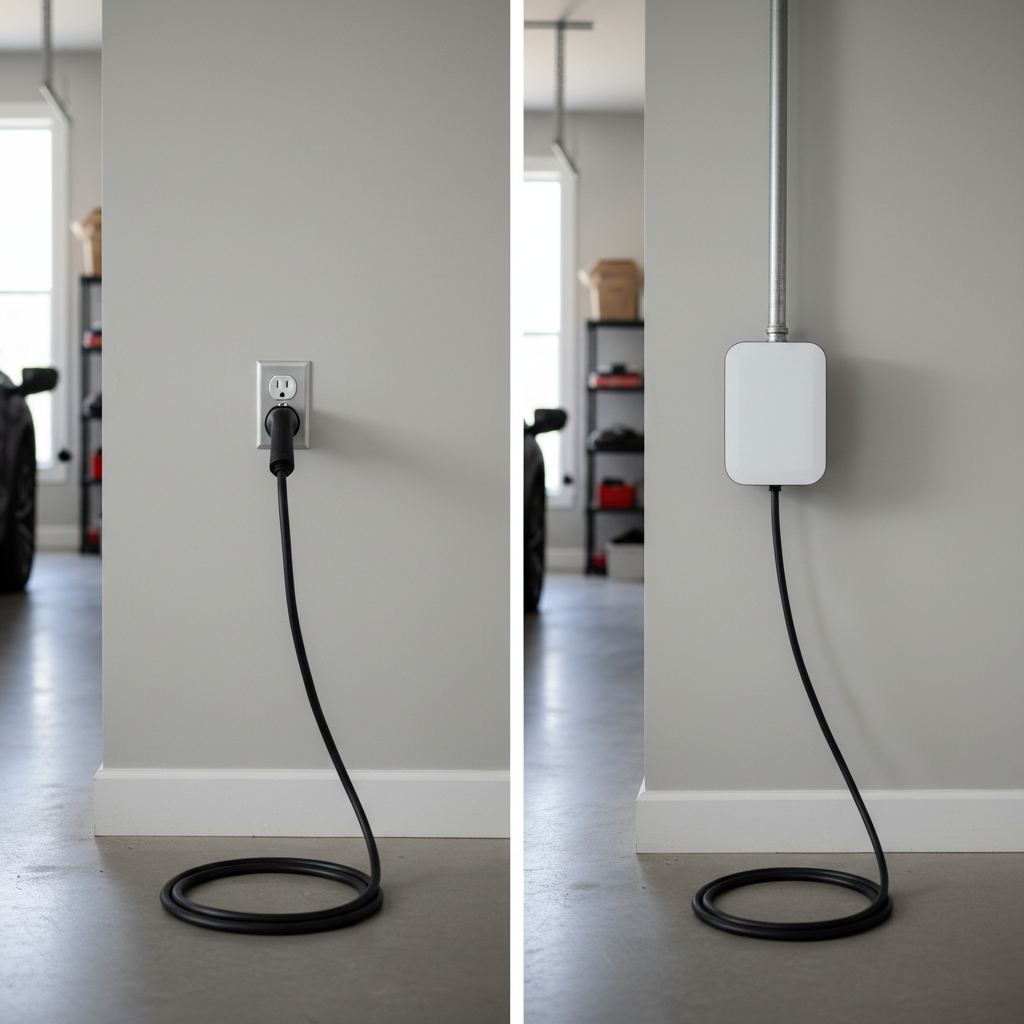
- Level 1 charging (120V, 12A): No panel work needed at all. Just plug into an existing outlet. Adds 3–5 miles per hour.
- Smaller Level 2 chargers (24A, 30A): Brands like JuiceBox offer a 24A model that only needs a 30A breaker. Still adds 15–20 miles per hour.
This is a good temporary solution while you save for a panel upgrade or wait for your utility’s service upgrade backlog to clear.
How to Get an Accurate Quote
The best approach:
- Get 2–3 quotes from licensed electricians (not just EV charger installers)
- Ask each to do a load calculation before quoting
- Ask specifically: “Do I need a panel upgrade, or can you work with what I have?”
- Check if your utility has a rebate program that covers panel upgrades - many do in 2026
Some utilities (like Pacific Gas & Electric and Xcel Energy) now offer no-cost or subsidized panel upgrades as part of electrification programs. It’s worth a call before paying out of pocket.
Frequently Asked Questions
Q: Can I install a Level 2 charger without a panel upgrade? A: Yes, if your panel has available capacity (200A service, open slots, and sufficient headroom after a load calculation). Many homeowners install Level 2 chargers with no panel work whatsoever.
Q: How do I know if I have 200-amp service? A: Check the main breaker at the top of your panel. It will be labeled - 100, 150, or 200 amps.
Q: Is a panel upgrade worth it even if I don’t need it yet? A: Often, yes. If you’re adding an EV charger AND considering an electric heat pump, induction range, or other high-draw appliances in the future, upgrading now saves you from doing it twice.
Q: Can I use a load management device instead of upgrading my panel? A: In some cases, yes. Devices like the Eaton EVEMS or smart EV chargers with power management (JuiceBox, ChargePoint) can prevent overloads without a panel upgrade. Ask your electrician if this applies to your situation.
Q: Who is responsible for the panel upgrade - me or the utility? A: The panel itself is your responsibility. The service entrance (wires from the street to your meter) is usually a shared responsibility - the utility upgrades their portion and you pay for your side. Your electrician can clarify based on your local setup.
Q: How long does a panel upgrade take? A: The installation itself is typically 4–8 hours. But getting permits approved and scheduling a utility disconnect can add 1–4 weeks to the timeline in some areas. Plan accordingly.
Sponsored
Need Help With Your EV Charger?
Get expert guidance on installation, costs, and the right charger for your home.
Get Your Free EstimateNeed Help With Your EV Charger?
Get expert advice on the right charger, installation requirements, costs, and how to maximize your savings.