Table of Contents
Installing a home EV charger is one of the smartest upgrades you can make as an electric vehicle owner. But before the charger goes on the wall, there is usually one step that catches people off guard - permits.
The short answer is yes, most cities and counties require an electrical permit for Level 2 EV charger installation. The longer answer depends on where you live, the type of charger you are installing, and whether your electrical panel needs modifications. This guide walks through everything you need to know about permits, inspections, and why skipping them is a bad idea.
When Is a Permit Required?
In nearly every jurisdiction in the United States, installing a 240-volt circuit requires an electrical permit. Since Level 2 EV chargers run on 240 volts and draw between 30 and 60 amps, they fall squarely into this requirement.
A permit is almost always required when:
- Installing a new 240-volt dedicated circuit
- Hardwiring a Level 2 charger to your electrical panel
- Adding a NEMA 14-50 outlet for a plug-in charger
- Upgrading your electrical panel to accommodate the charger
- Running new wiring through walls, attics, or conduit
A permit is typically NOT required when:
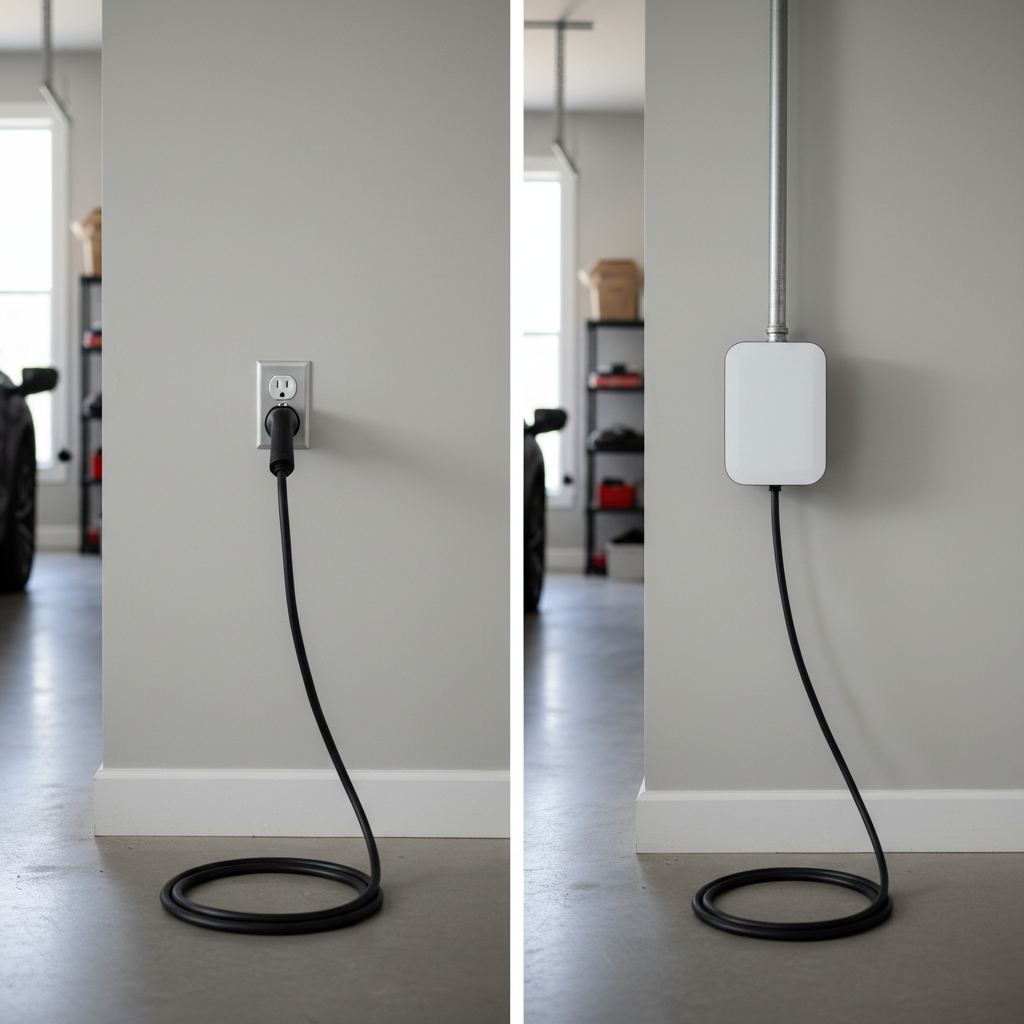
- Using a Level 1 charger that plugs into a standard 120-volt outlet
- Plugging a Level 2 charger into an existing NEMA 14-50 outlet that was already permitted and installed for another appliance
The distinction is simple. If new electrical work is being done, a permit is needed. If you are just plugging into an existing outlet, you are generally fine.
What Does the Permit Process Look Like?
The permit process varies by city, but the general steps are consistent across most areas.
Step 1: Application. The electrician or homeowner submits a permit application to the local building or planning department. This includes details about the charger, the circuit size, and the panel capacity.
Step 2: Review. The building department reviews the application. Some cities approve same-day. Others take one to two weeks. A few jurisdictions require a plan review for larger installations, especially if a panel upgrade is involved.
Step 3: Installation. Once the permit is approved, the electrician performs the work. The permit card is typically posted at the job site during installation.
Step 4: Inspection. After the work is complete, a city or county inspector visits to verify that the installation meets local electrical codes (based on the National Electrical Code). They check wire sizing, breaker ratings, grounding, and the charger placement.
Step 5: Final approval. If everything passes, the inspector signs off and the permit is closed. You are good to go.
Most licensed electricians handle the entire permit process for you. They pull the permit, schedule the inspection, and make sure everything is code-compliant. You should not have to visit city hall yourself.
How Much Does a Permit Cost?
Permit fees for EV charger installation typically range from $50 to $200, depending on your city. Some municipalities charge a flat fee for residential electrical permits, while others base the cost on the scope of work or the amperage of the circuit.
If a panel upgrade is required, the permit fee may be slightly higher - usually in the $100 to $300 range - because the scope of the project is larger.
In many cases, the electrician includes the permit fee in their overall installation quote, so there is no surprise cost.
What Happens If You Skip the Permit?
It might be tempting to skip the permit and save a few dollars. Do not do it. Here is why.
Insurance issues. If unpermitted electrical work causes a fire or property damage, your homeowner’s insurance may deny the claim. Insurance companies routinely check permit records after incidents.
Selling your home. When you sell your house, the buyer’s inspector or lender may flag unpermitted electrical work. This can delay or kill a sale, or force you to tear out the installation and redo it properly.
Safety risks. The inspection exists to catch mistakes - undersized wiring, improper grounding, overloaded panels. These are the kinds of errors that cause electrical fires. A $100 permit is cheap insurance against a catastrophic failure.
Fines. If your city discovers unpermitted work, you can face fines and be required to retroactively obtain permits at a higher cost.
Do You Need a Permit for a Tesla Wall Connector?
Yes. The Tesla Wall Connector is a hardwired Level 2 charger that requires a dedicated 60-amp circuit. It absolutely requires a permit in virtually every jurisdiction. The same applies to the ChargePoint Home Flex, Grizzl-E, JuiceBox, and every other hardwired or high-amperage charger on the market.
The brand of charger does not change the permit requirement. The electrical work is what triggers the permit.
What About HOA Approval?
If you live in a neighborhood with a homeowner’s association, you may need HOA approval in addition to a city permit. Many states have passed laws that limit an HOA’s ability to block EV charger installations, but you may still need to submit an architectural review application.
Check your HOA’s CC&Rs (covenants, conditions, and restrictions) before installation. A licensed electrician familiar with your area can often advise on HOA requirements as well.
State-Specific Permit Streamlining
Several states have taken steps to make EV charger permits faster and easier to obtain.
- California has a statewide mandate requiring cities to offer streamlined, over-the-counter permits for residential EV charger installations.
- Colorado and Oregon have similar expedited permitting programs.
- Many cities now offer online permit applications, so your electrician can pull the permit without an in-person visit.
As EV adoption grows, more jurisdictions are simplifying the process. Your electrician will know the current rules for your area.
How a Licensed Electrician Makes This Easy
The best way to handle EV charger permits is to hire a licensed electrician who does this work regularly. A good electrician will:
- Assess your electrical panel capacity before quoting the job
- Pull the permit on your behalf
- Install the charger and circuit to code
- Schedule and pass the inspection
- Provide documentation for your records
You should not have to worry about permit paperwork, code requirements, or inspection scheduling. That is what the electrician is for.
Frequently Asked Questions
How long does it take to get an EV charger permit? Most residential electrical permits are approved within one to five business days. Some cities offer same-day approval for straightforward installations. If a panel upgrade is involved, the review may take one to two weeks.
Can I install an EV charger myself and pull my own permit? In some jurisdictions, homeowners can pull their own electrical permits for work on their own property. However, the work still must pass inspection, and mistakes can be costly. Hiring a licensed electrician is strongly recommended.
Does a Level 1 charger need a permit? No. Level 1 chargers plug into a standard 120-volt outlet and do not require any new electrical work or permits.
Will my electrician handle the permit for me? Yes. Any reputable licensed electrician will pull the permit, handle the paperwork, and coordinate the inspection as part of the installation.
Do EV charger permits expire? Yes. Most permits have a window of 90 to 180 days to complete the work and schedule an inspection. If the permit expires, you may need to renew it for an additional fee.
Ready to Get Your EV Charger Installed the Right Way?
Skip the guesswork. A licensed electrician will handle the permit, the installation, and the inspection so you can start charging at home with zero hassle. Call today for a free EV charger installation quote and find out exactly what your project will cost - permits included.
Sponsored
Need Help With Your EV Charger?
Get expert guidance on installation, costs, and the right charger for your home.
Get Your Free EstimateNeed Help With Your EV Charger?
Get expert advice on the right charger, installation requirements, costs, and how to maximize your savings.