 Installation
Table of Contents
If you want faster home EV charging without paying for a dedicated hardwired unit, a 240V outlet is one of the smartest investments you can make. Specifically, the NEMA 14-50 outlet has become the go-to standard for EV owners who want Level 2 charging speed with maximum flexibility.
This guide walks through everything you need to know - what a NEMA 14-50 is, how the installation works, what it costs, and how it compares to a hardwired EVSE. By the end, you’ll know exactly what to expect when you call an electrician.
What Is a NEMA 14-50 Outlet?
NEMA stands for National Electrical Manufacturers Association. Their outlet standards define the physical configuration and electrical ratings of plugs and receptacles across North America.
The NEMA 14-50 is a 4-prong, 240V outlet rated for 50 amps. It’s the same type of outlet used for electric ranges, large RV hookups, and some welding equipment. You’ve probably seen one in a kitchen or RV park without knowing what it was.
For EV charging, the NEMA 14-50 matters because:
- It’s a universal standard - every major EV manufacturer’s portable charger is compatible
- It delivers 240V power, which is what Level 2 charging requires
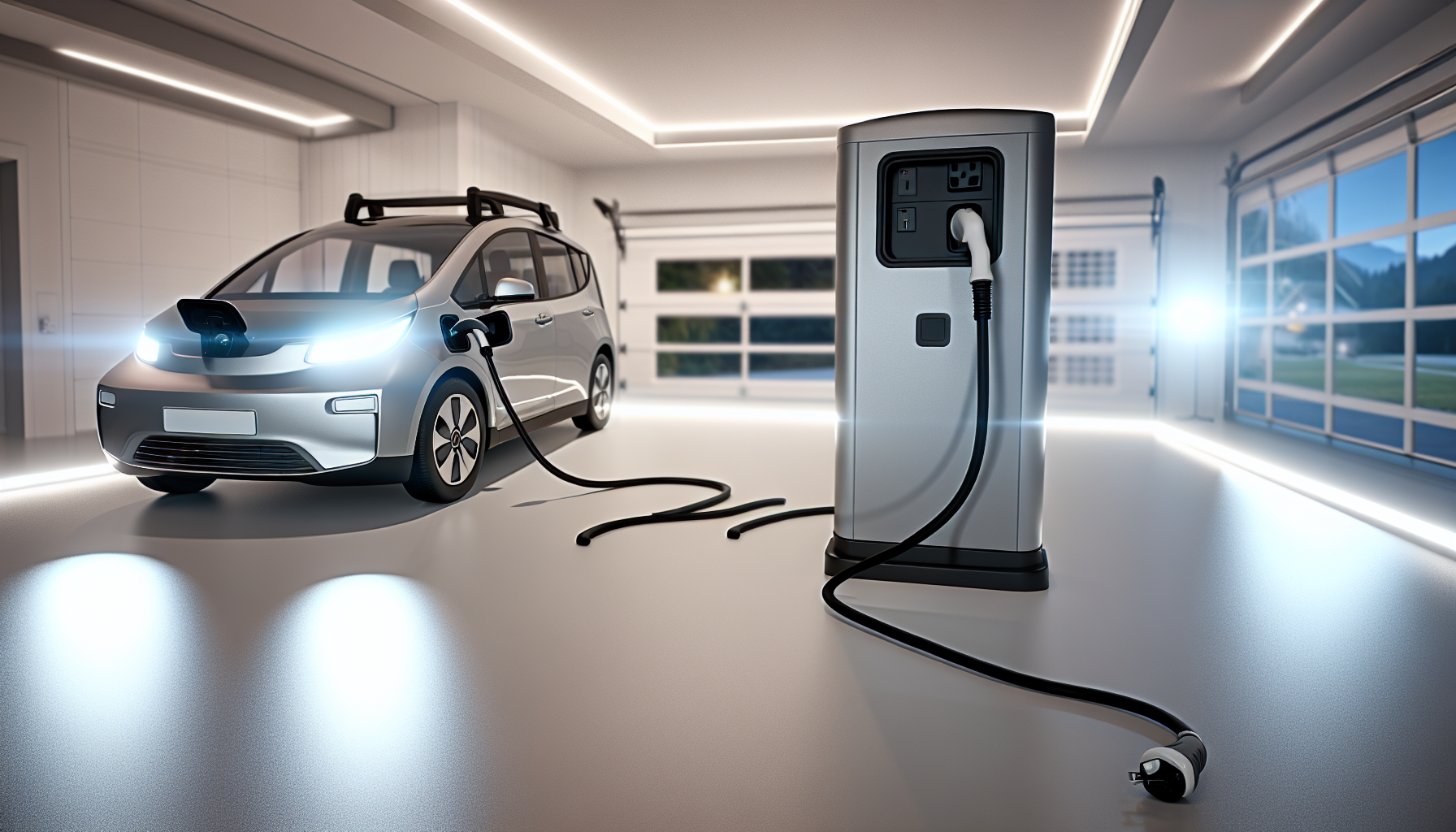
- It’s a plug-in solution, meaning you can use your car’s included mobile connector without buying a separate EVSE unit
- It’s relatively inexpensive to install compared to a fully hardwired Level 2 EVSE
The typical NEMA 14-50 installation costs $200–$600, compared to $500–$1,200+ for a hardwired Level 2 charger installation (not counting the cost of the charger itself, which runs $400–$800 for a quality unit).
How Fast Is a NEMA 14-50 Charger?
A NEMA 14-50 outlet delivers up to 9.6 kW of power (at 40 amps continuous, per NEC code - 80% of the 50-amp rating). In practical terms, this translates to roughly 25–35 miles of range added per hour of charging.
Here’s a quick comparison:
| Charging Level | Voltage | Speed | Hours to Full (60 kWh battery) |
|---|---|---|---|
| Level 1 (120V) | 120V | 3–5 mi/hr | 30–50 hours |
| NEMA 14-50 (240V) | 240V | 25–35 mi/hr | 6–8 hours |
| Hardwired Level 2 (48A) | 240V | 40–50 mi/hr | 4–5 hours |
For most EV owners, the NEMA 14-50 hits the sweet spot. You can charge a fully depleted 60 kWh battery overnight - and almost nobody needs to charge from empty every night.
What the Installation Involves
Installing a NEMA 14-50 outlet for EV charging isn’t dramatically different from installing any 240V circuit. Here’s what the process looks like:
Step 1: Electrical Panel Assessment
The electrician starts at your main panel to determine:
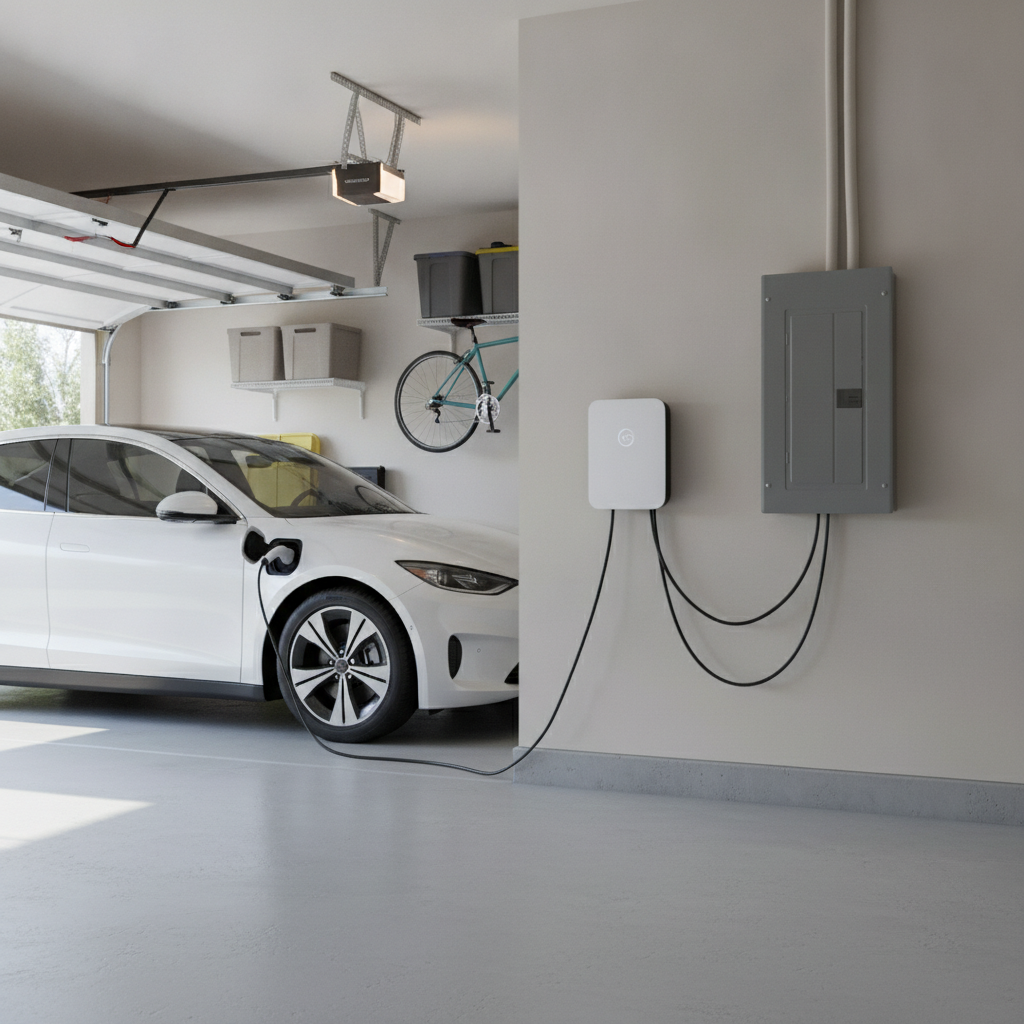
- Available capacity - Is there room for a 50-amp double-pole breaker? Most modern 200-amp panels have space, but older 100-amp panels may not without an upgrade.
- Current load - Does your home’s existing electrical load leave enough headroom for a 50-amp EV circuit?
- Panel location - How far is the panel from where you want the outlet? Distance affects wire cost.
Step 2: Running the Wire
A NEMA 14-50 circuit requires:
- 6-gauge wire - Specifically 6/3 (three conductors plus ground) for a 240V outlet
- Conduit - In garages, wire typically runs through EMT conduit for protection
- 50-amp double-pole breaker - Installed in the main panel
Wire runs are where costs vary most. A garage panel right next to the parking spot might need 10 feet of wire. A subpanel in a detached garage might need 50–100 feet. Every foot of wire adds cost.
Step 3: Outlet Installation
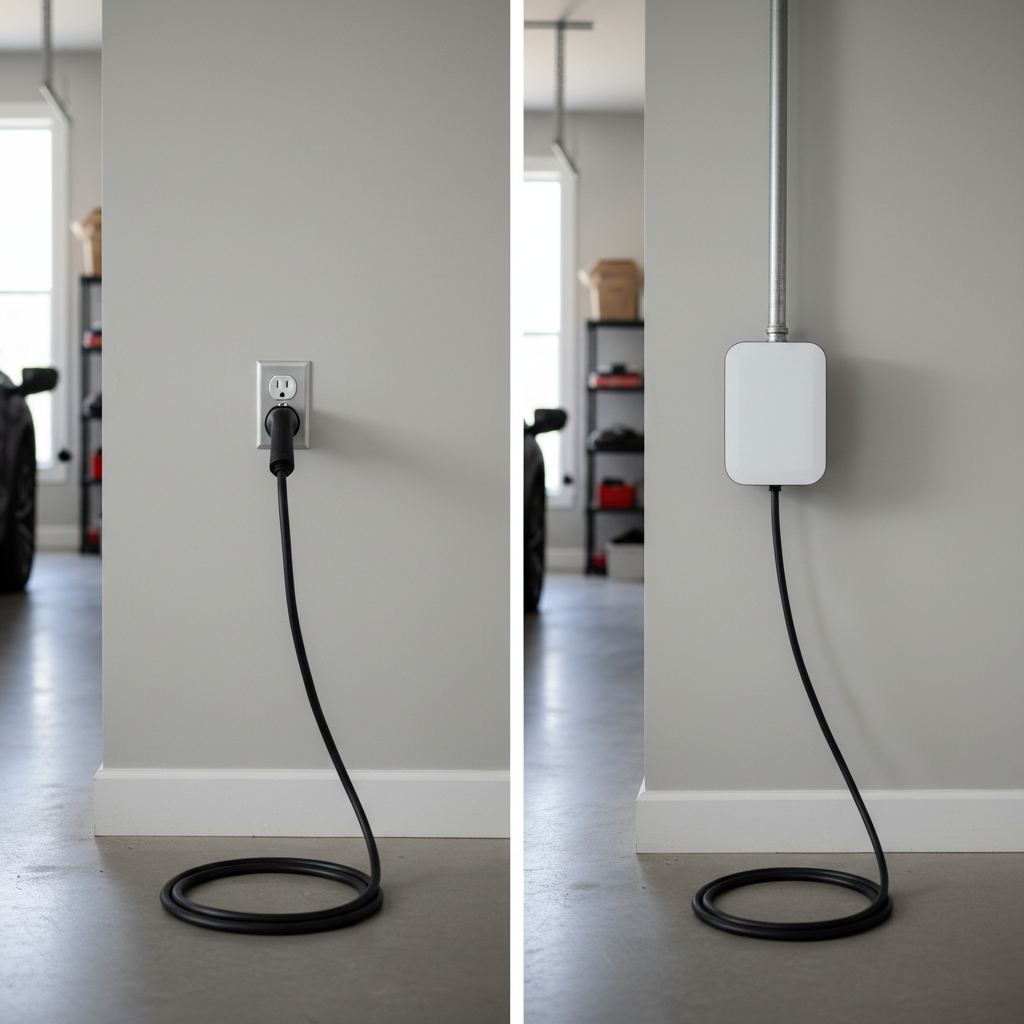
The NEMA 14-50 receptacle itself is straightforward - a weatherproof box and cover plate if it’s in a garage or outdoors, standard box if it’s interior. The outlet is wired with the hot conductors, neutral, and ground properly terminated.
Step 4: Inspection and Testing
A proper installation gets inspected by your local building department. More on this in a moment - but yes, you need a permit for this.
NEMA 14-50 vs. NEMA 6-50: What’s the Difference?
You may see both NEMA 14-50 and NEMA 6-50 mentioned for EV charging. Here’s the practical difference:
- NEMA 14-50 - 240V, 4 prongs (two hots, one neutral, one ground). More versatile because it has a neutral wire, making it compatible with equipment that needs 120V leg access.
- NEMA 6-50 - 240V, 3 prongs (two hots, one ground). No neutral wire. Slightly less expensive to wire because you use 6/2 instead of 6/3 wire.
For EV charging specifically, either works - EVs don’t use the neutral conductor during charging. The NEMA 14-50 is more common because it’s compatible with more equipment, so most EV portable chargers are built around it. Tesla’s mobile connector uses a NEMA 14-50 adapter, and so does the standard J1772 mobile EVSE that comes with most other EVs.
What It Costs
Installation costs vary significantly based on your home’s electrical situation:
Simple installation (panel in garage, short wire run): $200–$400 total including labor, wire, breaker, outlet, and permit
Moderate installation (panel in house, garage needs 20–40 feet of wire): $400–$700 total
Complex installation (long wire run, conduit through walls, or subpanel work): $700–$1,200+
Panel upgrade required (older 100-amp service or full panel): $1,500–$3,500 for the panel upgrade alone, plus outlet installation
Get at least two quotes from licensed electricians. Be wary of quotes that seem too low - they may not include the permit, or the contractor may not be properly licensed.
Federal Tax Credit
The federal Alternative Fuel Vehicle Refueling Property Credit (30C) covers 30% of the cost of installing EV charging equipment at your home, up to $1,000 for residential installations. This applies to the EVSE (the portable charger that plugs into the outlet), not the outlet installation itself - but it’s worth stacking with any state or utility incentives.
Check with your utility company too. Many utilities offer rebates of $100–$500 for Level 2 charger installations as part of demand management programs.
DIY: Is It Ever Appropriate?
Some EV owners ask whether they can install a NEMA 14-50 themselves. The honest answer: only if you’re a licensed electrician or have significant experience with electrical work.
The installation itself isn’t technically complex, but the risks are real:
- Safety - 240V at 50 amps is lethal and can cause fires if improperly wired
- Code compliance - Unpermitted work can cause insurance issues and create problems when selling your home
- Vehicle warranty - Some EV manufacturers note that charging issues from improper installations may not be covered
Hire a licensed electrician. The cost is worth it for the safety and peace of mind.
Choosing the Right Location
Where you put the outlet matters. Things to consider:
- Height - Install 18–24 inches off the floor so the plug hangs without tension on the cord
- Side of the car - Install on the same side as your EV’s charge port so the cord doesn’t stretch across the vehicle
- Weatherproofing - Use a weatherproof in-use cover if the outlet is exposed to elements
- Access - Make sure the outlet is easily accessible and not behind stored items
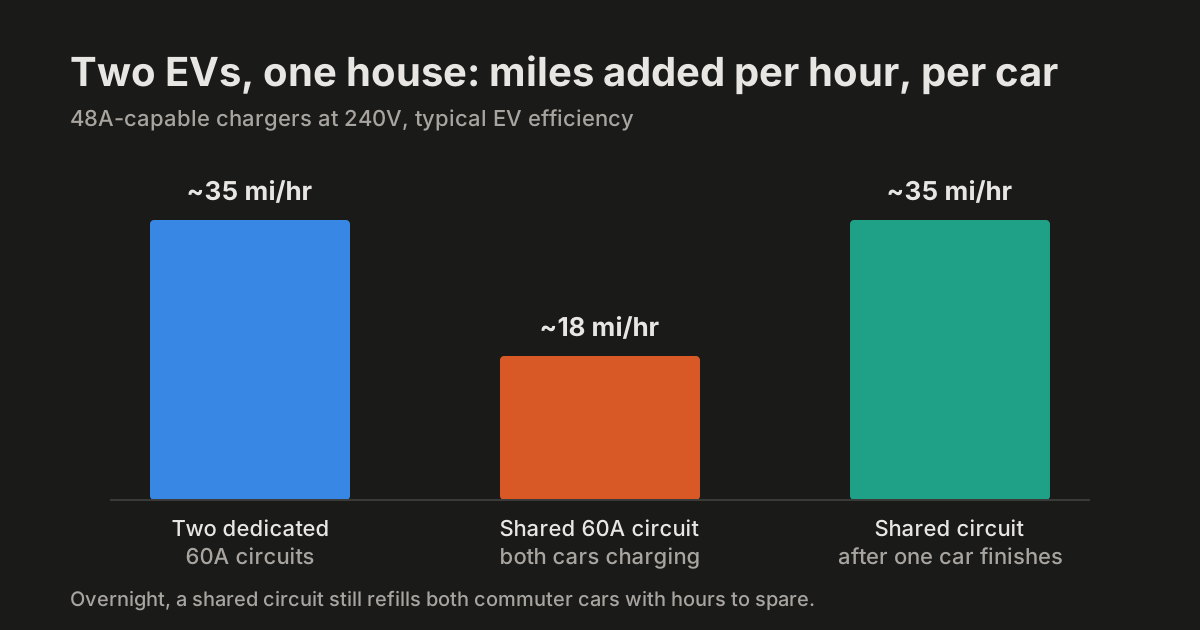
If you have multiple EVs or expect to in the future, discuss with your electrician whether to rough in wiring for a second outlet now - it’s much cheaper to do during the original installation.
Frequently Asked Questions
How long does a NEMA 14-50 installation take? Most straightforward installations take 2–4 hours. More complex jobs with long wire runs or panel work can take a full day. Schedule accordingly and expect to be home.
Do I need a permit to install a NEMA 14-50 outlet? Yes, in virtually all jurisdictions. Any new 240V circuit requires a permit and inspection. This protects you - the inspection ensures the work was done correctly and your homeowner’s insurance remains valid. An electrician who tells you a permit isn’t needed is a red flag.
Can I use a NEMA 14-50 outlet for other things besides EV charging? Absolutely. NEMA 14-50 is a standard outlet type used for RV hookups, electric ranges, and other large appliances. If you ever sell your EV or upgrade to a hardwired charger, the outlet remains useful.
What portable charger do I need for a NEMA 14-50 outlet? Your EV likely came with a mobile EVSE (portable charger) that includes a NEMA 14-50 adapter or is directly compatible. Check your owner’s manual. If you need a standalone unit, brands like JuiceBox, Grizzl-E, and Lectron all make portable Level 2 chargers with NEMA 14-50 plugs for under $200.
What gauge wire is required for a NEMA 14-50 EV charger circuit? A 50-amp circuit requires 6-gauge wire minimum. Per NEC (National Electrical Code), the wire must be rated for the breaker size - so 6 AWG for a 50-amp breaker. Some electricians will use 6 AWG THHN in conduit or 6/3 NM-B cable depending on the installation location.
How much does it cost to charge an EV using a NEMA 14-50 outlet? It depends on your local electricity rate. The national average is around $0.13–$0.16 per kWh. A 60 kWh battery costs roughly $8–$10 to charge from empty. Compared to gasoline, most EV owners pay the equivalent of $1–$1.50 per gallon in electricity costs.
Sponsored
Need Help With Your EV Charger?
Get expert guidance on installation, costs, and the right charger for your home.
Get Your Free EstimateNeed Help With Your EV Charger?
Get expert advice on the right charger, installation requirements, costs, and how to maximize your savings.